
Jiu-Jitsu gives families a shared routine that strengthens bodies, steadies minds, and keeps everyone moving in the same direction.
In San Jose, schedules can get hectic fast: school, work, commutes, screens, and the constant sense that everyone is busy in different rooms. We meet a lot of families who are looking for one activity that actually sticks, not just for a few weeks, but as a real rhythm that supports health and brings people closer. That is where Jiu-Jitsu fits in a surprisingly practical way.
When you train together, you are not just burning calories or learning moves. You are practicing calm under pressure, learning how to communicate without friction, and building a kind of trust that shows up outside the mats too. Our job is to make that process welcoming and structured so you can walk in, learn safely, and keep coming back without feeling overwhelmed.
Why Jiu-Jitsu works so well for family health in San Jose
San Jose has plenty of ways to “work out,” but families often tell us they want something more complete. Jiu-Jitsu is physical, but it is also skill-based, so you are not relying on motivation alone. You are learning, improving, and seeing progress in a way that feels earned.
A full-body workout that does not feel like a chore
Jiu-Jitsu builds real, usable strength: grip, core stability, posture, hip mobility, and balance. Because class has technique, drilling, and controlled training rounds, you do not spend an hour zoning out. You stay engaged. That matters when you are tired after work or your teen is resisting “exercise” in general.
Over time, many students notice better endurance in daily life, fewer aches from sitting all day, and more confidence moving their body. It is not instant, but it is steady, which is kind of the point.
Stress relief you can feel, not just talk about
San Jose life can be mentally noisy. One of the underrated benefits of Jiu-Jitsu is that it forces your attention into the present moment. When you are learning a technique or solving a problem in live training, your brain does not have room to spiral on emails, deadlines, or the next thing.
We also keep training structured so you can challenge yourself without chaos. That structure is calming. You leave class tired in a good way, like your mind got to exhale.
Health habits that carry into the rest of the week
A family routine is powerful. When your household trains, you start making small choices that support training without even thinking about it: better sleep, more water, less skipping meals, a bit more stretching. Jiu-Jitsu becomes an anchor point, not another random appointment.
Unity is not accidental: how training together changes family dynamics
Most families do not come in saying, “We want better communication.” They come in saying, “We want to get in shape,” or “We want something for confidence and self-defense.” But unity shows up anyway, because Jiu-Jitsu creates shared language and shared experiences.
A shared challenge creates shared respect
In Jiu-Jitsu, everyone starts as a beginner. Kids learn that adults are still learning too. Parents get to see their kids work through frustration and improve. Siblings, who might compete in unhelpful ways at home, learn to cooperate and train with control.
One small moment we see a lot: a parent watching their child finally remember a technique detail, and the child realizing the parent is proud for a reason that has nothing to do with grades or trophies. That moment matters.
Better conflict management without lectures
You cannot train well if you panic, lash out, or ignore feedback. Training rewards patience, posture, breathing, and problem-solving. Those same habits apply to arguments at home, stress at school, and tension at work.
We do not pretend a martial arts class fixes everything. But we do see students become more emotionally steady over time. When you practice staying calm in uncomfortable positions, everyday stress feels more manageable.
Connection without screens
This is simple, but it is real: training is face-to-face time. You are learning, moving, and laughing at the awkward beginner moments together. Families often tell us they talk more on the drive home than they expected, usually about what they learned or what felt hard.
What a safe, family-friendly Jiu-Jitsu culture looks like
Families often have the same first concern: safety. That is a good concern. Jiu-Jitsu is a contact sport, and the way it is taught matters.
Our approach emphasizes progressive learning and controlled training. You build fundamentals first, then add complexity, then add intensity. That sequence protects your body and keeps your confidence growing instead of getting crushed early.
How we keep training realistic without being reckless
We focus on technique, timing, and decision-making, not brute force. In class, you learn how to tap, how to protect your training partners, and how to increase intensity gradually. This matters for adults who have jobs to go to the next morning, and it matters for kids who are still developing coordination and body awareness.
We also pay attention to pairing students appropriately. A good class has challenge, but it should also feel manageable.
A clean, structured environment supports consistency
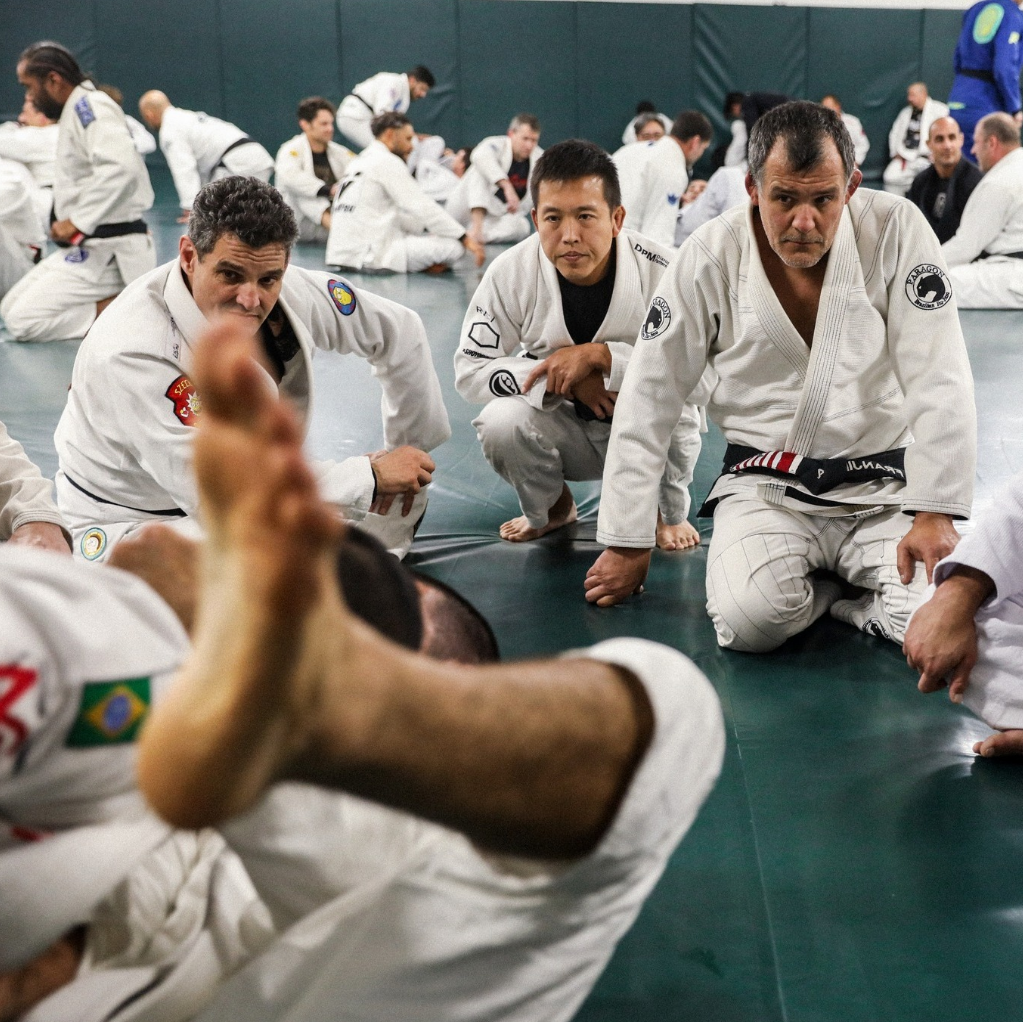
Families thrive on predictability. When you know what class looks like, you are more likely to come back. A typical session includes a warm-up with purpose, a clear technique lesson, drilling with coaching, and optional training rounds depending on level. That steady structure is one reason Jiu-Jitsu San Jose, CA families make training part of their week instead of a short-lived experiment.
The role of Adult Jiu-Jitsu in family leadership
Parents set the emotional tone at home. When you train, you model patience, humility, and follow-through. That is not a slogan. Your kids notice it.
Adult Jiu-Jitsu San Jose, CA training also gives you something that is yours. Many parents tell us they have spent years supporting everyone else, and they want a practice that improves their health and confidence without needing perfect conditions. Jiu-Jitsu works because you can start where you are, even if you are tired, even if you have not worked out in a while.
Strength and cardio with a skill you can measure
It is easier to stay consistent when progress is visible. In Jiu-Jitsu, you can track improvements in movement, escapes, balance, and decision-making. You feel it in your body and see it in your training rounds. That feedback loop is motivating in a quiet way.
Confidence that is calm, not performative
A lot of “confidence” advice is vague. Training is specific. You learn how to handle pressure, how to keep breathing, how to think in steps. Over time, that becomes a steady kind of confidence that shows up at work meetings, in parenting moments, and in stressful situations where you need to stay composed.
What you can expect as a new family starting Jiu-Jitsu
Starting anything new as a family can feel like herding cats. We get it. The goal is to make your first steps clear and low-pressure so you can focus on learning.
Here is what helps most beginners settle in quickly:
• Arrive a little early so you are not rushing and can get oriented to the training space
• Expect to feel awkward at first, because everyone does, and that is normal
• Focus on one or two details per class instead of trying to remember everything
• Ask questions when something feels confusing or physically uncomfortable
• Aim for consistency over intensity, especially in the first month
If you keep showing up, the pieces start connecting. Techniques become familiar, your conditioning improves, and the social side becomes comfortable too.
Why families stick with Jiu-Jitsu when other routines fade
We hear a familiar story: gym memberships that went unused, sports that got too competitive, or activities that did not work for different ages. Jiu-Jitsu tends to last because it meets multiple needs at once: health, skill-building, stress relief, and community.
It scales for different ages and personalities
Some students love athletic intensity. Some prefer technical problem-solving. Some are shy at first. Jiu-Jitsu has room for all of that. You can train hard, or train thoughtfully, and still improve.
That flexibility matters in a family, because not everyone is motivated by the same thing.
It creates community without forcing it
Families often want connection but not awkward social pressure. Training naturally creates familiarity. You see the same people each week, you learn names over time, and you build trust through training etiquette. It feels organic, not forced.
It teaches responsibility in a hands-on way
Showing up, listening, taking feedback, and treating training partners with respect are not abstract values in Jiu-Jitsu. You practice them every class. Kids and teens especially benefit from that kind of consistent, real-world reinforcement.
How we build a path from beginner to confident practitioner
One reason people quit martial arts is confusion: too many techniques, not enough structure, and no clear sense of progress. We take the opposite approach. We want you to know what you are learning and why it matters.
A typical progression looks like this:
1. Learn core positions and movement so you can stay balanced and safe
2. Add escapes and defenses so you can handle pressure calmly
3. Build control and submissions with attention to timing, not strength
4. Develop strategy and adaptability as training rounds become more dynamic
5. Keep refining fundamentals, because fundamentals are what work when things get messy
This kind of structure helps families because it is predictable. You can see improvement without guessing whether you are “doing it right.”
Take the Next Step
Building a healthier, more unified routine does not require a huge lifestyle overhaul. It takes one practical commitment that your family can return to each week, and Jiu-Jitsu happens to deliver a lot of value for the time you put in. When you train, you are investing in fitness, confidence, and a calmer household dynamic, all at once.
We designed our programs at Gracie Jiu-Jitsu San Jose to feel welcoming for first-timers while still offering serious skill development for students who want to grow. If you are curious, the best next step is simple: look at the class schedule, choose a starting point, and come experience a class in person.
Ready to begin training? Join a Jiu-Jitsu class at Gracie Jiu-Jitsu San Jose today.